

THE SILENT SERVICE CODE
The Language of Silverware at the Table
In the world of fine dining, your silverware speaks a silent language. Long before a word is exchanged with your server, the placement of your fork and knife communicates whether you are still eating, resting between courses, or have finished your meal entirely.
This tradition — known as the Silent Service Code — is one of the most refined and practical elements of dining etiquette. Mastering it ensures that your dining experience is seamless, elegant, and uninterrupted by unnecessary inquiries.
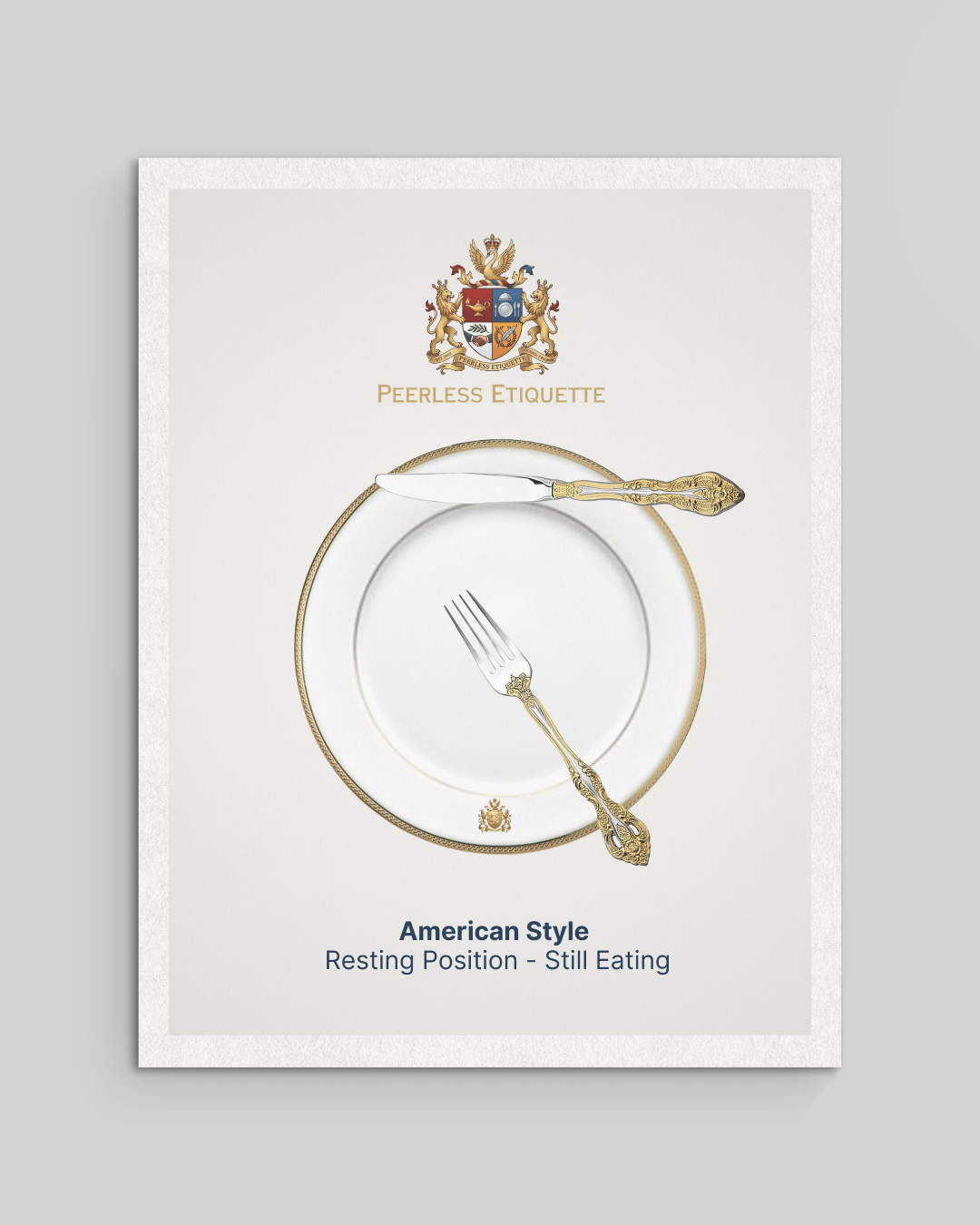
American Style — Resting Position
In the American style, the resting position signals to your server that you are still enjoying your meal. The fork is placed tines-up on the left side of the plate, and the knife rests on the upper right edge with the blade facing inward. This arrangement tells the waitstaff to leave your plate undisturbed — you are simply pausing between bites.
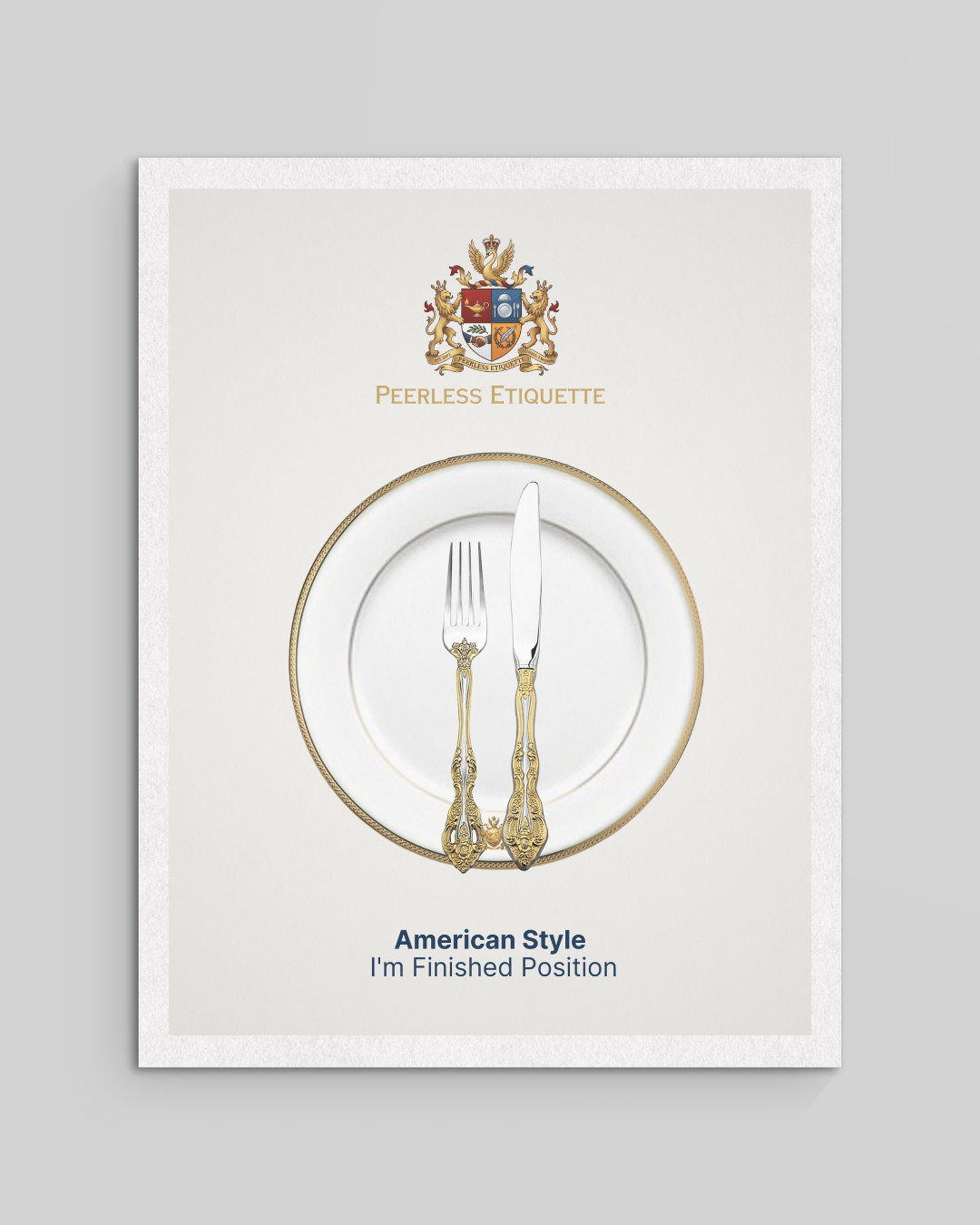
American Style — I'm Finished Position
When you have finished your meal in the American style, place your fork (tines up) and knife side by side diagonally across the plate, with the handles at approximately the four o'clock position. The blade of the knife should face inward toward the fork. This universally recognized signal tells your server that your plate may be cleared.
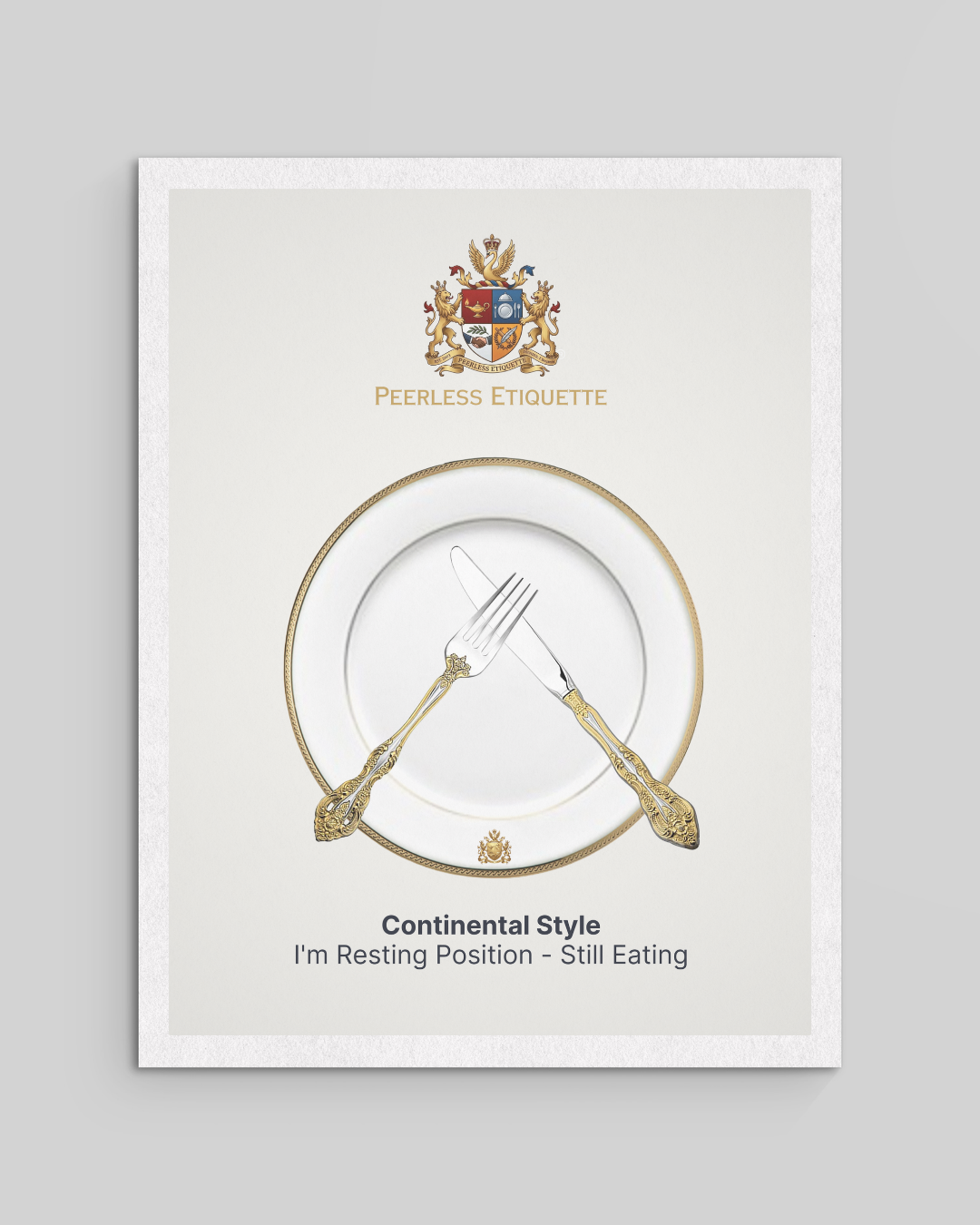
Continental Style — Resting Position
The Continental (or European) resting position is distinct and elegant. The fork is placed tines-down on the left side of the plate, and the knife rests on the right, with the two forming an inverted "V" or crossed position. This tells the server you are still dining and signals refined awareness of international table customs.
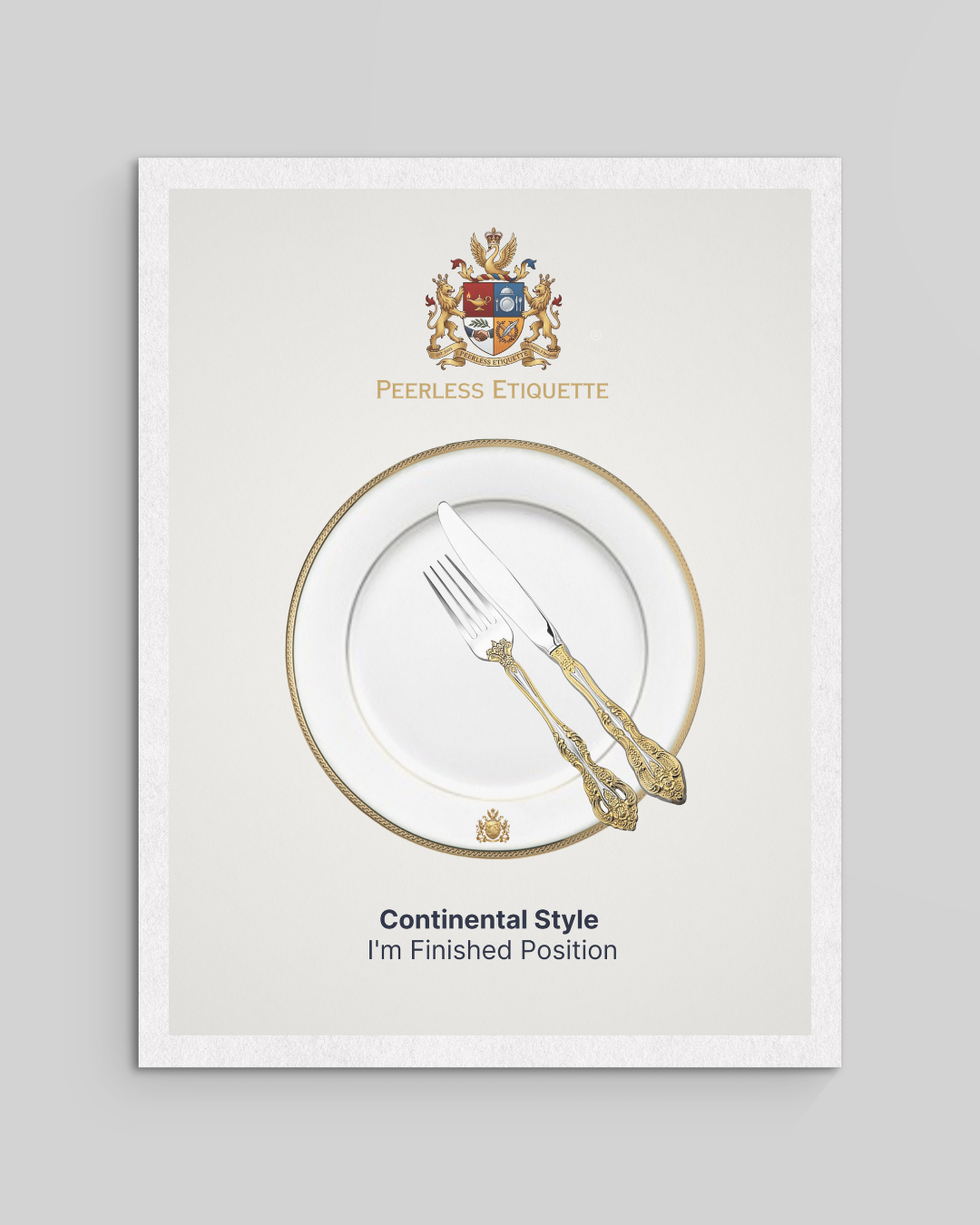
Continental Style — I'm Finished Position
In the Continental style, the finished position places the fork (tines down) and knife side by side at the center-right of the plate, handles pointing toward you at roughly the five o'clock angle. The knife blade faces inward. This clean, parallel arrangement is the European standard for signaling that you have completed your course.
WHY IT MATTERS
A misplaced fork can lead to your plate being cleared before you are finished.
Proper silverware placement shows awareness and respect for dining traditions.
It communicates quietly — no need to wave down your server or explain yourself.
It distinguishes a confident, cultured diner from a casual one.